Posted on

English around the world

Learn English in a fun and educational way during a summer camp in the Netherlands. Learning English has never been so much fun!

Speaking fluent English, what parent doesn't want this for his or her child? English is the undisputed world language: in international schools for expat families, in science and higher education, at consulates, for international networking. With English you can go anywhere in the world.

Not just in England

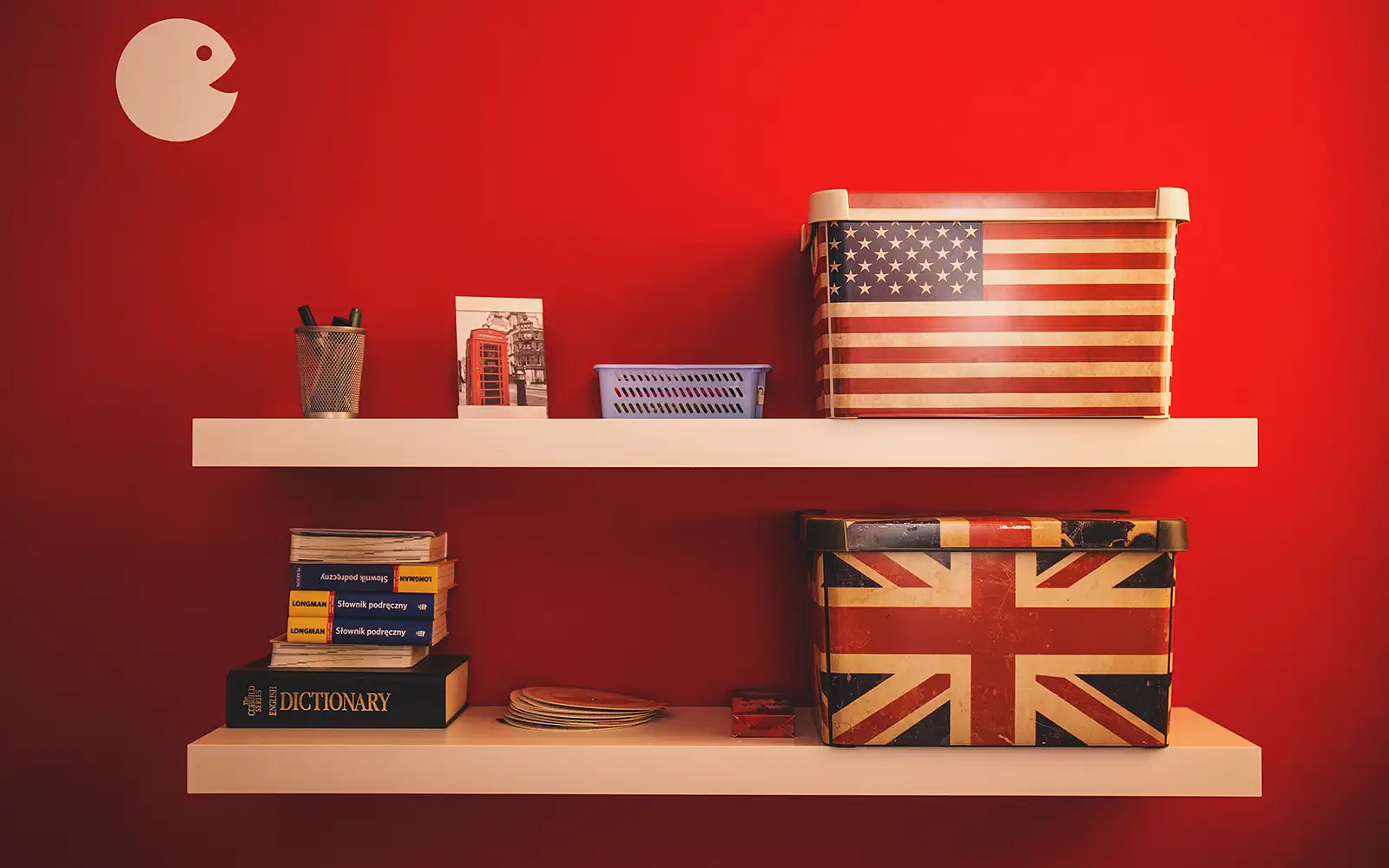
English is spoken in many places, in many shades. People often know the difference between "American English" and "British English" - also referred to as the Cambridge variety. But there are other major currents within the world's English-speaking population. Consider the inhabitants of Australia or Canada - they speak English with their own tongues and their own specific expressions. In addition, there are smaller nations where English is spoken as a "first language": well-known examples are Ireland, Malta and Jamaica.

English as a second language

There are also many areas where English has official status, even though it is not the native language of most inhabitants. This is the case in South Africa, the Philippines and in Rwanda, among others. Often this is related to the former colonial status of the country in question. Also in India, after Hindi, English is the second most widely spoken language - especially among the elite. Indian students often fan out around the world with a very good command of English.

Eye-catching differences

Anyone who looks at the use of English around the world cannot ignore the differences. Specific words, spelling and pronunciation often give away unerringly whether someone comes from America or England. Interestingly enough, Dutch children often know mainly the American sayings, because they also hear them the most on television and social media.

An idiom of its own

An important difference in English language use is evident in words that are used in the United Kingdom but sound strange in the United States because the Americans use a synonym. A familiar example is 'elevator' versus 'elevator' or 'chips' versus '(French) fries'. Australian does not really add its own words to the language, but it does add abbreviations: 'arvo' for 'afternoon' and 'bikie' for a motorcyclist, for example.

Other differences

Even when the same word is used there are striking differences: namely in pronunciation and in spelling. A native speaker can unerringly hear whether someone is from America, and we are all familiar with the snappy tone in which Australians speak English. For spelling there are a number of mnemonics and rules. Your favorite color is your 'favorite color' in the UK and in the US it suddenly becomes 'favorite color'. The most important thing for someone learning the language is to know that these differences exist, so you can deal with them consciously.

Starting early

The best stage for learning a language is in childhood. It is a shame if, when it comes to English, children draw their own conclusions based only on the mainstream offerings in the media, combined with a smattering of school English. Moreover, little attention is paid to these differences within the language at school. Therefore, it may be important to look for other places where a child can learn English. During a summer camp, for example, young people actively come into contact with the language and learn in a playful manner how important and versatile the English language is in the world.

Keep it flowing

When the children's language level has been boosted, there is really nothing more fun than letting them put this into practice. This can of course be done during a trip to a country where English is the official language. For example, let your child do the talking in a store or a restaurant. But there are also other ways to stay actively involved with the language. It can be very stimulating to meet up with the other participants of the camp week or with classmates and catch up on all the adventures in English.

Is your son or daughter next?

Our youth camp is the place where, as a parent, you want to see your child grow up to be fluent English speakers. With engaging and interactive teaching methods, we provide a stimulating environment where children not only learn the language, but also understand and embrace it. Through fun activities, creative projects and cultural exchanges, they gain not only language skills, but also self-confidence and global perspectives.


Posted on

The British national anthem: God Save the Queen

Learn English in a fun and educational way during a summer camp in the Netherlands. Learning English has never been so much fun!

The British national anthem is heard before the British play soccer. Snatches of it can be heard in various movies and series. Everyone has heard part of the British national anthem - God Save the Queen - at one time or another. Interestingly, however, the origin of this song is very unclear. It is even quite possible that the song did not originate from Britain, but came from France!

The origins of the British national anthem

Although there are many ambiguities about the national anthem, a few things are certain. What is clear is that the British national anthem dates from the eighteenth century. However, parts of other songs may well have been used to create the national anthem, songs that are much older. The music of the national anthem came about before the lyrics. Who composed the music is also not entirely clear. However, it is usually attributed to one of these gentlemen: John Bull, Thomas Ravenscroft, Henry Purcell and Henry Carey. Of these, Henry Carey is the best known and usually gets the credit for creating the music. Yet it is also very likely that the melody is a combination of several tunes composed together by these gentlemen.


The song is based on a French song that dates back to 1686: "Grand Dieu Sauve Le Roi. This freely translated means 'God, save the King'. The title of the British national anthem therefore has more or less the same meaning: 'God, save the Queen.'


It is quite possible that there was an earlier version of the song written as early as the 17th century for King James II: "God Save Great James Our King. A later version was written for King George. Since there was a king on the throne at the time the British song was written, the original title was not "God, Save the Queen," but "God, Save the King. The text was first published in the journal Thesaurus Musicus in 1744. In 1745, it was published in The Gentleman's Magazine. The text had been slightly modified by then. The song was also first performed in London in 1745.

Officially no national anthem

Although the song is known worldwide as the British national anthem, officially it is not. In fact, it has never been so designated as such by the British Parliament. Nor is there a version of the song that has been generally approved. Although it is not officially an anthem, this is still the song you hear when the British play soccer, for example.


It is a tradition that is not bound by rules, and if there is one thing Britons generally appreciate, it is traditions. Think of going to the pub on weekends and patiently standing in line for anything and everything. By the way, the national anthem is only used by England itself. Scotland and Wales have their own national anthems.

Other similar melodies

'God Save the Queen' has a melody that may seem familiar. In fact, parts of the tune have been incorporated into other melodies. For example, Beethoven incorporated the tune into his music in no fewer than seven variations. Haydn and Brahms also used the tune for inspiration. Moreover, the music of the British unofficial anthem has also been used by other countries as the basis for their national anthems. 'Oben am jungen Rhein,' the national anthem of Liechtenstein, uses the same melody. The American "My country 'Tis of Thee" also has the same tune.

British history

Although The British National Anthem is not officially an anthem, it has played a major role in the development of other anthems and melodies composed by famous composers. It is therefore inseparable from the history of Britain.

Do you already know the British national anthem?

At our youth camps we encourage not only fun and learning, but also cultural enrichment. We teach children and youth about England's rich past and the importance of symbols such as the English national anthem, "God Save the Queen." Through music, history and meaning, children learn to appreciate the cultural aspects of the English language and develop their own identity within a global context.